New to Yoga? Why Beginners Often Do Better Than They Expect
Many people think they need to be flexible, strong, or experienced before starting yoga.
The truth is, beginners often do better than they expect, especially in a studio designed to support real bodies.
You do not need to prepare your body for yoga before attending your first class. You do not need to learn the poses, buy special clothes, or become more flexible.
Learning is the reason you come.
Beginners Are Not Behind
People often enter their first yoga class believing everyone else will know what to do. They worry about keeping up, looking awkward, losing their balance, or being the least flexible person in the room.
Those fears are understandable, but yoga is not a performance.
A beginner has the opportunity to learn each movement with curiosity instead of relying on assumptions about how a pose should look. When instruction is clear and the environment feels supportive, new students can begin developing better movement habits from the start.
At Balance Yoga, we intentionally teach in a way that meets people where they are. Our classes are small, beginner-friendly, and focused on alignment, body mechanics, and understanding why movements work, not simply copying shapes.
Beginners Often Pay Attention Differently
Being new can actually be an advantage.
Beginners tend to:
Listen more closely to their bodies
Move with intention instead of force
Ask questions that lead to real understanding
Build strength and confidence one step at a time
Notice changes because they are learning from the ground up
Remain open to using props and trying different options
When you are new, there may be less pressure to perform a pose from memory. You can focus on what you feel, what you notice, and what helps the movement work better for your body.
That awareness is one of the most valuable skills yoga can teach.
You Do Not Need to Be Flexible
“I’m not flexible enough for yoga” is one of the most common concerns we hear.
Flexibility is not a requirement. It is only one small part of movement.
Yoga can also help you develop strength, balance, coordination, breath awareness, confidence, and a better understanding of your body.
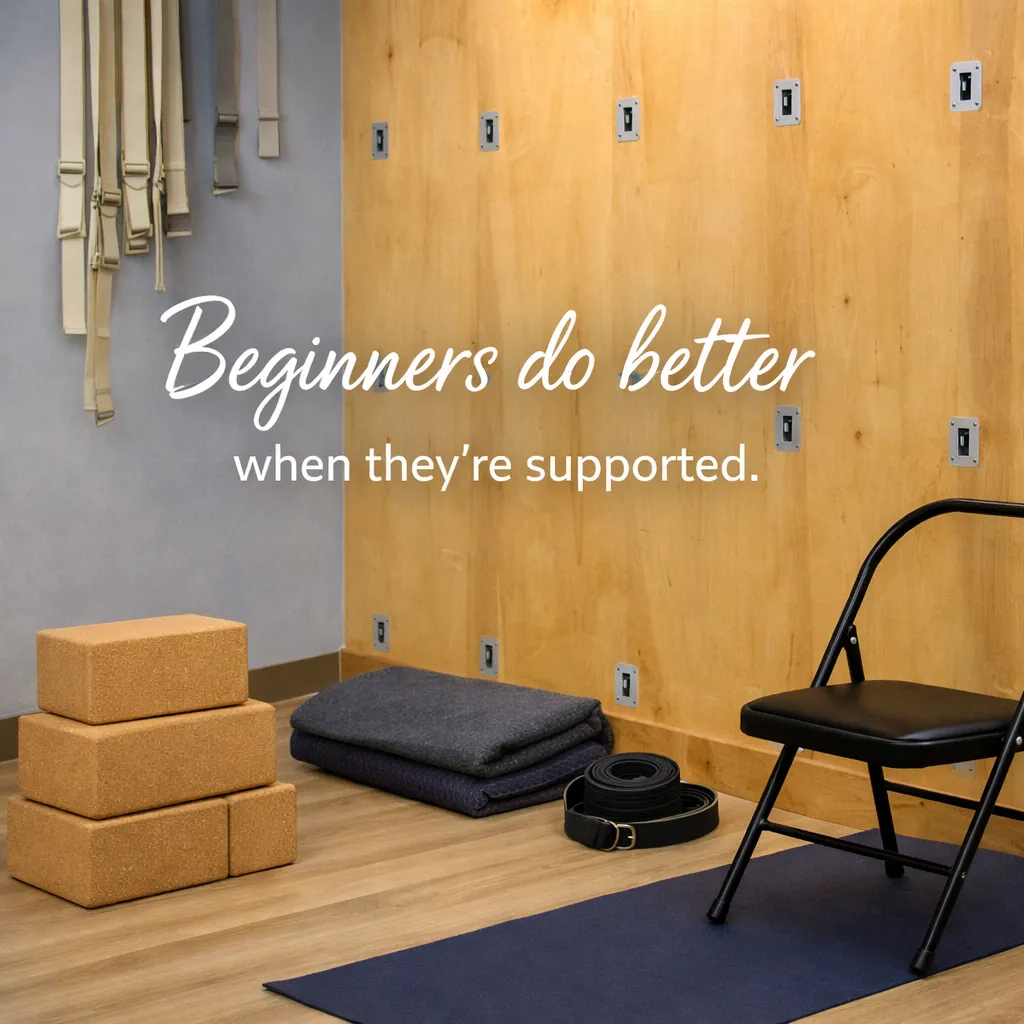
If your hands do not reach the floor, we can use blocks. If getting up and down is difficult, we can use a chair. If you need more support or feedback, we can use straps, blankets, bolsters, or the Yoga Wall.
The movement should be adjusted to support your body. Your body should not be forced to match a picture of a pose.
Small Classes Make a Difference
A beginner-friendly class is not just a slower version of an advanced class.
Beginners benefit from instruction that explains:
Where to place the feet
How to distribute weight
What muscles should be working
Where movement should come from
How breathing affects effort and tension
How to make a movement smaller or more supportive
What sensations deserve attention
Small classes allow an educator to see how each student is moving and offer individual guidance. They also give students more opportunities to ask questions and understand the purpose behind the movement.
At Balance Yoga, our semi-private class sizes help us teach people instead of simply calling out poses from the front of the room.
Props Are Part of Learning
Using a prop does not mean you are failing or doing an easier version of yoga.
Props provide information. They can bring the floor closer, improve stability, support a joint, extend your reach, or help you feel where your body is in space.
A block, strap, chair, or wall can help you understand the movement without guessing or forcing.
Beginners often accept this support more readily because they have not yet decided there is only one correct way to perform a pose. That willingness to explore can lead to better body awareness and more confidence.
What If You Have Pain or Limitations?
Many people begin yoga because they feel stiff, uncomfortable, weak, unsteady, or disconnected from their bodies.
You are allowed to begin with the body you have today.
A supportive yoga class should offer choices and encourage you to notice how your body responds. Depth is not the goal. Movement quality and control matter more.
Pain is also personal and complex. New, severe, or unexplained pain should be evaluated by an appropriate healthcare professional. Yoga instruction does not replace medical care, but it can help you explore movement, breathing, strength, and body awareness in a guided environment.
Returning to Yoga Still Counts as Beginning
You may have practiced yoga years ago and feel as though you should remember everything.
You do not have to return at the level where you stopped.
Bodies change. Strength changes. Balance changes. Life experiences, stress, injuries, and daily habits can all affect how movement feels.
Returning with a beginner’s mindset gives you permission to observe your body as it is now rather than comparing it with the body you remember.
The Goal Is Not the Most Advanced Pose
Yoga is not about doing the deepest stretch or the most impressive posture.
It is about learning how your body works, how to support it, and how to move in a way that feels sustainable.
The goal is not to make movement look impressive. The goal is to make movement feel better, work better, and support daily life.
That is why beginners often thrive at Balance Yoga, and why so many students say they wish they had started this way sooner.
If you are new to yoga or returning after time away, our beginner-friendly classes in Springfield, Illinois, can be a supportive place to begin.
You do not need to be flexible, experienced, or fearless.
You only need to be willing to show up.


