Pelvic Floor Yoga: It’s About More Than Kegels
Pelvic Floor Yoga: It’s About More Than Kegels
When people hear “pelvic floor,” they often think of one thing: Kegels.
Squeeze... Hold... Repeat...
But the pelvic floor is more complicated than that, and stronger is not always better.
The pelvic floor needs to contract when support is required, relax when release is needed, and respond appropriately to breathing, movement, and changes in pressure. Like every other muscle group, it works best when it has a balance of strength, mobility, coordination, and rest.
That is why pelvic floor health involves much more than repeatedly tightening the muscles.
What is the Pelvic Floor?
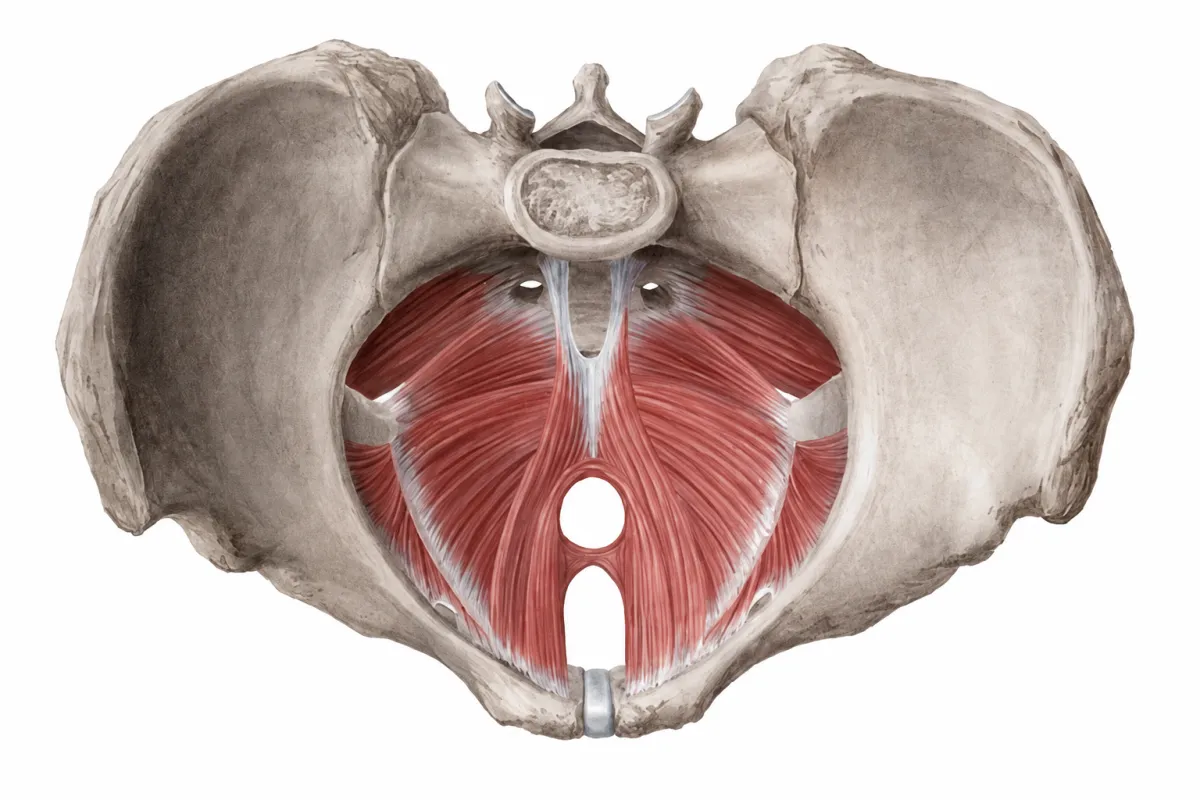
The pelvic floor is a group of muscles and connective tissues that forms a supportive base at the bottom of the pelvis.
These muscles help support the bladder, bowel, and reproductive organs. They also contribute to bladder and bowel control, sexual function, pressure management, and stability through the pelvis and trunk.
The pelvic floor does not work alone. It is part of a larger system that includes the diaphragm, abdominal muscles, spinal muscles, hips, and breath.
When one part of this system changes, other areas may adjust or compensate.
A Pelvic Floor Can Be Weak, Tight, or Poorly Coordinated
Pelvic floor problems are not always caused by weakness.
Some people have difficulty creating or maintaining an effective contraction. Others hold too much tension and have difficulty relaxing. A muscle can even be tight and weak at the same time.
An overactive pelvic floor does not fully relax when relaxation is needed. Depending on the person, this may contribute to discomfort, difficulty with bladder or bowel function, painful intercourse, or a feeling of persistent tension in the pelvic region.
This is one reason that automatically prescribing more Kegels is not appropriate for everyone. Strengthening a muscle that is already gripping may add more tension instead of improving function.
The first question should not always be, “How do I make my pelvic floor stronger?”
A better question may be, “What does my pelvic floor need to do more effectively?”
Your Breath and Pelvic Floor Work Together
The diaphragm and pelvic floor respond to one another during breathing.
As you inhale and the diaphragm moves downward, the pelvic floor normally responds by lengthening and yielding. As you exhale and the diaphragm rises, the pelvic floor naturally recoils.
This does not mean that every breath must be controlled or that you should constantly think about contracting your pelvic floor. It means that breathing and pelvic floor movement are coordinated parts of the same pressure-management system.
Research has also explored diaphragmatic breathing as part of care for urinary symptoms, showing that pelvic floor function cannot always be separated from the way we breathe. PubMed: Diaphragmatic Breathing and Urinary Incontinence
If you constantly hold your abdomen tight, brace unnecessarily, or restrict the movement of your ribs and diaphragm, pressure may not be managed as efficiently as it could be.
Learning to breathe well is not the entire answer, but it is an important part of understanding the pelvic floor.
Pressure has to go Somewhere
Everyday actions create changes in pressure inside the abdomen.
Coughing, sneezing, laughing, lifting, standing from a chair, exercising, and having a bowel movement all require the body to manage pressure.
If the breath is held, the abdomen is forcefully braced, or the body is poorly positioned, pressure may be directed downward toward the pelvic floor.
The solution is not to avoid movement. It is to improve how the body coordinates breath, support, and effort.
This may include:
Exhaling during the most demanding part of a movement
Avoiding unnecessary breath-holding
Using the legs and hips effectively
Adjusting posture and body position
Learning when to engage and when to release
Choosing an appropriate amount of effort
Gradually building strength and capacity
These are body-mechanics skills that can be practiced and improved.
The Hips and Pelvis Matter Too
The pelvic floor attaches within the pelvis, so the position and movement of the pelvis can influence how these muscles work.
The hips, inner thighs, gluteal muscles, abdominal muscles, and spinal muscles all contribute to the way forces move through this area.
This does not mean there is one perfect posture that everyone must maintain. It means that having movement options matters.
A body that can shift, adapt, stabilize, and relax is generally better prepared for daily activities than a body that relies on constant gripping.
Pelvic floor-focused yoga may include gentle hip mobility, supported positions, breathing practices, spinal movement, balance, and awareness of how the pelvis responds during movement.
Pelvic Floor Strength is More than a Squeeze
Useful pelvic floor strength includes the ability to respond at the right time and with the right amount of effort.
The pelvic floor may need to respond quickly during a cough or sneeze. It may need endurance during walking or exercise. It also needs to release during urination, bowel movements, sexual activity, and rest.
A healthy muscle should not remain contracted all day.
Think about making a fist. Being able to squeeze tightly demonstrates one kind of strength. But if you could not open your hand afterward, your hand would not be functioning well.
The pelvic floor needs access to both engagement (contraction) and relaxation (release).
How Yoga May Support Pelvic Floor Awareness
Yoga is not a replacement for individualized pelvic floor physical therapy or medical care. However, thoughtfully taught movement may help people become more aware of their breathing, posture, pressure, tension, and movement habits.
A pelvic floor-informed yoga practice may help students explore:
Diaphragmatic breathing
Rib and abdominal movement
Pelvic mobility
Hip strength and mobility
Coordinating breath with effort
Relaxing unnecessary muscular tension
Using support instead of gripping
Moving with greater awareness
The goal is not to perform a perfect pose or contract the pelvic floor throughout an entire class.
The goal is to better understand how the body works as a connected system.
When to Seek Individual Help
Pelvic floor symptoms are common, but common does not mean that you should ignore them.
Consider speaking with a qualified medical professional or pelvic floor physical therapist if you experience persistent leakage, pelvic pressure or heaviness, pelvic pain, painful intercourse, difficulty emptying the bladder or bowel, or other changes that concern you.
An individualized assessment can help determine whether your pelvic floor needs strengthening, relaxation, coordination, or another type of support.
Learn More at Balance Yoga
Balance Yoga will host Strong, Soft & Supported: Pelvic Floor Yoga + Education on Saturday, September 19 in Springfield, Illinois.
Guest educator Sarah Hocking, PTA and pelvic floor specialist, will explain how the pelvic floor works and answer common questions. Angie Ryan, owner of Balance Yoga 217, will guide accessible yoga movements focused on breathing, posture, hips, core support, pressure management, and pelvic floor awareness.
This workshop is designed to provide practical information you can use in daily life. No previous yoga experience is needed.
Space is limited, and advance registration is required.


