Why Yoga Props Aren’t Cheating: They Help You Move Smarter
You can pound a nail in with a rock.
But a hammer does the job better.
A screwdriver works.
But a drill gives you more control, precision, and less strain.
Yoga props work the same way.
Props don’t make yoga “easier.”
They make it smarter.
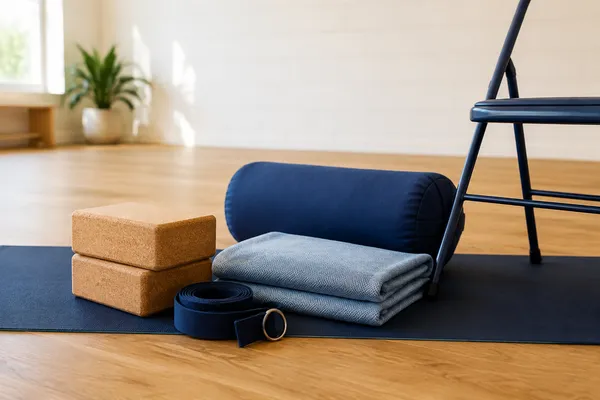
Blocks, straps, blankets, bolsters, chairs, and the Yoga Wall give your body feedback. They help you feel where you are in space, support areas that need it, and allow strength and flexibility to develop without guessing or forcing.
Yoga Props Are Teaching Tools
A yoga prop is not simply something to lean on when a posture feels difficult. It can help you understand what your body is doing.
A block may bring the floor closer so you can maintain better alignment. A strap may help you reach your foot without rounding your spine or straining your shoulders. A chair can provide stability while you develop strength, balance, and confidence.
Props make it easier to notice whether you are moving with control or compensating somewhere else.
That awareness is an important part of learning better body mechanics.
What Different Yoga Props Can Teach You
Different tools provide different kinds of support and feedback:
Blocks bring the floor closer, support alignment, and help reduce unnecessary reaching or collapsing.
Straps extend your reach and help you explore movement without forcing your joints.
Blankets and bolsters provide cushioning and support so your body can settle into a position more comfortably.
Chairs offer stability, make transitions more accessible, and create opportunities to build strength and balance.
The Yoga Wall provides feedback, resistance, traction, and support that can help students better understand alignment.
The purpose is not to use every prop in every posture. The purpose is to choose the tool that helps you understand and perform the movement more effectively.
Props Help Beginners and Experienced Students
At Balance Yoga, props are part of how we teach body mechanics. They help beginners feel successful sooner and allow experienced students to refine how they move.
A beginner may use a block to make a posture more accessible. An experienced student may use that same block to notice a subtle shift in the feet, pelvis, ribs, or shoulders.
The prop does not determine the difficulty of the practice. How you use it determines what you learn.
This isn’t about chasing shapes or pushing deeper. It’s about learning how your body works and giving it the right tools.
Support Can Improve the Quality of Movement
When the body cannot comfortably reach a position, it often finds another way to get there. The spine may round, the shoulders may tense, or the breath may become restricted.
A well-placed prop can reduce the need for those compensations. It gives you an opportunity to slow down, breathe, and organize the movement more clearly.
Depth is not the goal. Movement quality and control matter more.
Using Props Is Not Cheating
If you’ve ever thought props meant you were cheating or doing yoga “wrong,” consider this your permission slip.
Tools don’t replace effort. They can make learning safer, clearer, and more effective.
When your body feels supported, you have more opportunity to notice what is happening, make adjustments, and build confidence.
Learning to move well often starts with choosing the right tools.
At Balance Yoga in Springfield, Illinois, we use props in our beginner-friendly yoga classes, Chair Yoga, body mechanics classes, private sessions, and Great Yoga Wall programs. You do not need to be flexible or experienced to benefit. You only need to be willing to learn how your body moves.


