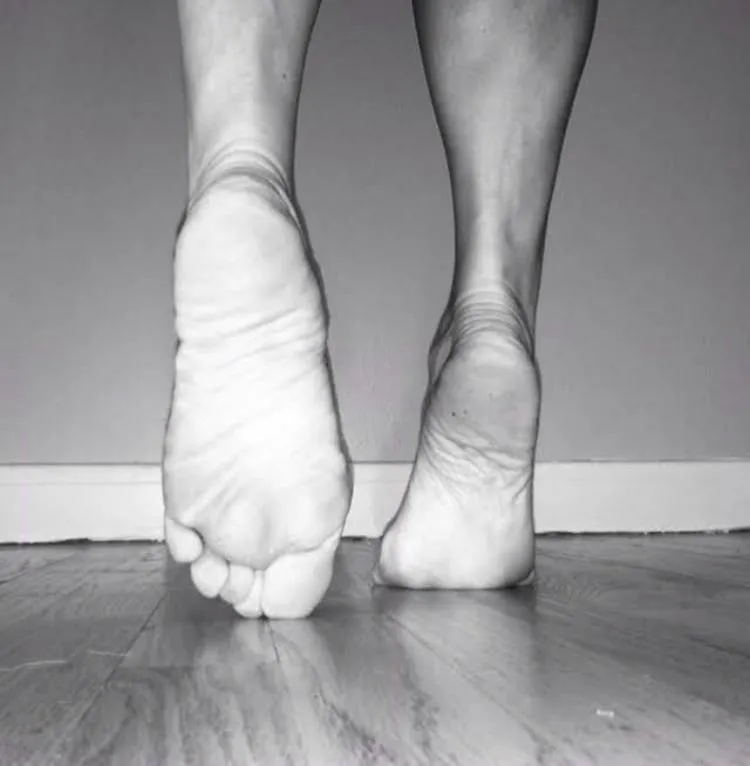
Your Feet Are Your Foundation: How Foot Mechanics Affect the Entire Body
Most people do not think much about their feet until something begins to hurt.
We put them into shoes, stand on them, walk on them, and expect them to carry us through thousands of steps. But the feet are not simply platforms attached to the bottoms of the legs.
Each foot is a complex structure designed to provide support, absorb and transfer force, adapt to the surface beneath us, and help move the body forward.
The way your feet meet the ground can influence what happens at the ankles, knees, hips, pelvis, and spine.
That does not mean every knee, hip, or back problem begins in the feet. It means the feet are an important part of the whole-body movement system and should not be ignored.
My Own Story Started With My Feet
My work as a Yoga Educator and Body Mechanic is deeply connected to my own experience with a severe foot injury.
After seeing nine doctors and facing the possibility of surgery, I began paying closer attention to how my feet affected the way I stood, walked, and organized the rest of my body.
Yoga helped me understand that the painful area was not the only area that mattered.
The position of my foot affected my leg. My leg affected my pelvis. My pelvis affected my spine. My scoliosis added another layer to the way my body compensated.
That experience changed the direction of my life and eventually shaped the way I teach at Balance Yoga today.
The Foot Needs Both Stability and Mobility
A foot that is completely rigid cannot adapt well to the ground or absorb force efficiently.
A foot that collapses without control may not provide enough support when the body needs to push away from the ground.
Healthy foot function requires both mobility and stability.
The foot needs to soften and adapt as weight arrives. It also needs to become more organized and supportive as the body moves forward.
This is why simply telling someone to “lift your arches” or “stop pronating” does not solve every foot problem. Pronation is a normal part of walking. The question is whether the foot can move into pronation, control that movement, and move out of it when needed.
Your Toes Are Supposed to Move
The toes help with balance, sensory feedback, and push-off during walking.
The big toe is especially important as the body travels forward over the foot. If the big toe does not extend well, the body may find another route. The foot might turn outward, the heel may lift early, or movement may shift somewhere else.
The smaller toes also contribute to contact with the ground and help the foot respond to changes in balance.
Yet many people rarely move their toes independently. Shoes may limit toe spreading, and years of disuse can make toe movement feel surprisingly difficult.
In class, we may practice:
Toe flexion and extension
Toe spreading
Big-toe movement
Smaller-toe movement
Foot doming without gripping
Controlled heel lifts
Shifting weight through different areas of the foot
These small movements are not party tricks. They help reconnect the brain with parts of the body that may not be participating as effectively as they could.
The Foot Influences What Happens Above It
When the foot meets the ground, movement travels through the leg.
As the foot pronates, the lower leg normally rotates. That movement can influence the direction of the knee and the position of the hip. When the foot becomes more rigid for push-off, the leg must respond again.
Researchers studying foot posture and foot-muscle training continue to examine how changes at the foot influence balance, gait, and lower-extremity movement. Some studies have found improvements in dynamic foot function and balance after focused foot-muscle training, although no single exercise is appropriate for everyone. PubMed: Foot Exercise and Dynamic Foot Function
The important idea is not that the feet control everything. It is that they participate in everything we do while standing.
If the feet are not receiving or transferring force effectively, another area may attempt to create the stability or movement that is missing.
How Do You Stand on Your Feet?
Many people stand heavily in their heels.
Others shift toward the inside edges, outside edges, or balls of the feet. Some grip their toes to feel stable. Others lift their toes without realizing it.
At Balance Yoga, I often begin with approximately 60 percent of the pressure through the heels and 40 percent through the base of the toes.
This is not a rigid mathematical rule for every person or every activity. It is a teaching tool that helps students move away from sitting back entirely into the heels while keeping the toes relaxed and connected to the floor.
From there, we observe:
Can you feel the heel?
Can you feel the base of the big toe?
Can you feel the base of the little toe?
Are your toes relaxed or gripping?
Is one foot carrying more weight?
Does your pressure change when you bend your knees?
What happens at your knees and hips when your feet shift?
Awareness gives us information. Once we understand what the body is doing, we can begin making useful adjustments.
Shoes Can Change the Information Your Feet Receive
Shoes can provide protection, cushioning, warmth, and support. They can also change how much movement and sensory information the feet experience.
This does not mean everyone should immediately begin walking barefoot. A sudden change may create more demand than the feet are prepared to handle.
Instead, consider whether your shoes:
Allow enough room for your toes
Bend where your foot needs to bend
Hold the foot securely without excessive gripping
Match the activity you are performing
Feel comfortable rather than simply looking good
Are worn unevenly from long-term movement habits
Building foot strength or increasing barefoot time should be gradual and appropriate for the individual.
Foot Strength Is More Than Picking Up a Towel
Towel scrunches are often recommended as a foot exercise, but repeatedly curling the toes is not the only way to strengthen the foot.
The feet need to support body weight during standing, walking, balance, and push-off.
Useful foot training may include:
Standing with balanced pressure
Controlled weight shifts
Heel lifts with organized toes and ankles
Single-leg balance with appropriate support
Stepping and walking with awareness
Strengthening the hips and legs
Practicing how the foot adapts during movement
Research on intrinsic foot-muscle training suggests it may improve some measures of foot function and balance, but results vary depending on the person and the program. PubMed: Intrinsic Foot-Muscle Training
The goal is not to create a perfect-looking arch. The goal is to improve how the foot functions.
Start by Paying Attention
You do not need an elaborate exercise program to begin learning from your feet.
Take off your shoes and stand comfortably.
Notice where you feel pressure.
Notice whether your toes are gripping.
Slowly shift forward, backward, and side to side.
Then return to the middle.
Can you feel more of your foot than you did before?
This is the beginning of body awareness.
Observe what is happening.
Understand how it affects the rest of the body.
Then make an adjustment that supports better movement.
Observe. Understand. Adjust.
Learn How Your Feet Affect Your Movement
Foot awareness and body mechanics are woven throughout classes at Balance Yoga in Springfield, Illinois.
We do not look only at the area that hurts. We look at how the entire body works together and where movement, strength, support, or awareness may be missing.
If your feet, knees, hips, or back have been bothering you, yoga may help you better understand the way you stand and move. Persistent or unexplained pain should also be evaluated by an appropriate medical professional.
Your feet are where your body meets the ground.
They deserve more attention than they usually receive.
Balance Yoga
Springfield, Illinois


